


Cortina d’Ampezzo, Italy — The silence that descended upon the Olympia delle Tofane course on Sunday was heavy, a stark contrast to the roar of anticipation that had greeted the 41-year-old legend just moments before. Lindsey Vonn, in a comeback that defied medical logic and the laws of aging, lay prone on the snow, her Olympic journey ending not with a medal, but with a helicopter rescue. Lindsey Vonn’s 2026 Olympics Journey
To the casual observer, the crash that halted the women’s downhill final at the 2026 Milan-Cortina Games might look like a tragic failure—a bridge too far for an athlete who refused to listen to her body. But to view Vonn’s 2026 campaign through the lens of a single fall is to misunderstand the nature of her final act. Her presence in the starting gate, just nine days after rupturing her ACL and five years after retirement, was a statement of resilience that transcends the podium.
While the day ended in surgery for Vonn, it also culminated in gold for Team USA, a victory inextricably linked to the mentorship and path Vonn carved for her successors.
The Crash Heard Around the World
It took only 13 seconds for the dream to encounter the brutal reality of gravity. Vonn, the 13th racer to take the course, attacked the upper section of the Tofane with the signature aggression that defined her career. However, as she navigated a high-speed right turn, her right ski pole appeared to clip a gate. The subtle contact at nearly 70 mph was enough to destabilize her.
Vonn was thrown off balance, her weight shifting backward before she was launched sideways into the air. She landed hard on her left side, sliding violently into the safety netting. The race was immediately red-flagged. For more than ten minutes, medical personnel attended to Vonn on the slopes while thousands of fans, including her father Alan Kildow, watched in hushed anxiety.
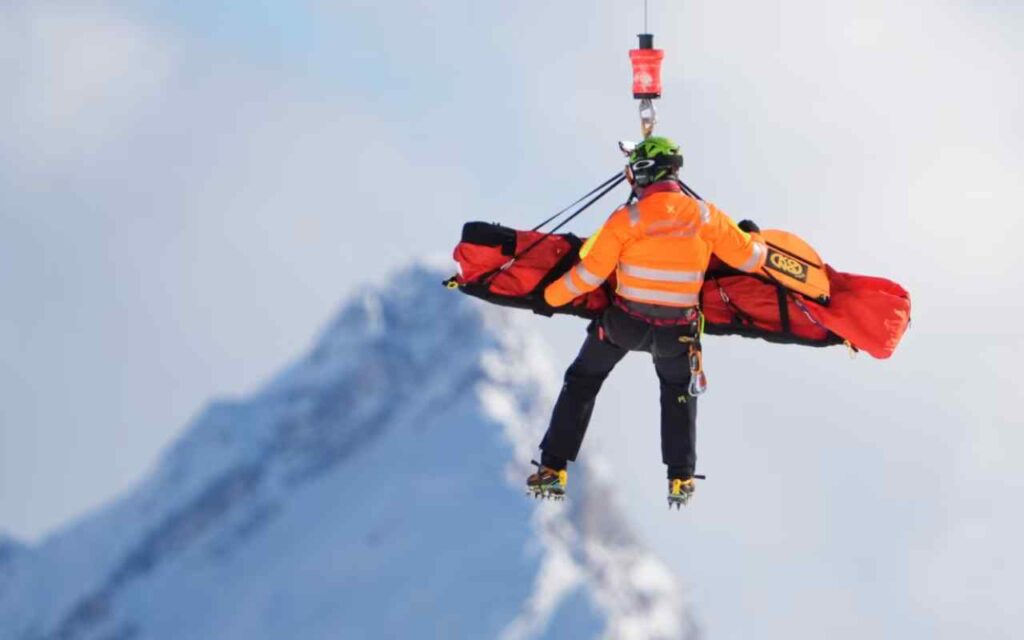
Eventually, Vonn was strapped to a sled and airlifted to a hospital in Treviso. The diagnosis was grim but manageable: a fracture in her left leg requiring immediate surgery. This was the same leg in which she had torn her ACL less than two weeks prior, and the opposite of her right leg, which functions with a titanium knee replacement.
A Medical Marvel: Defying the Odds
To understand why simply starting this race was a victory, one must look at the physical toll Vonn has paid to be here. After retiring in 2019 due to extensive knee damage, Vonn underwent a partial knee replacement—a procedure usually signaling the end of high-impact sports, let alone Olympic downhill skiing.
Yet, in late 2025, Vonn announced her return. She was fast, competitive, and seemingly defying biology. Then came the crash in Crans-Montana, Switzerland, on January 30, 2026. She ruptured her ACL—a career-ending injury for almost anyone else. Instead of withdrawing, Vonn opted to ski without a functioning ACL, relying on leg strength and a heavy brace.
The Physical Stakes Entering Race Day
Passing the Torch to Breezy Johnson
Perhaps the most poetic moment of the day occurred after the helicopter faded from view. The race resumed, and the heavy atmosphere lingered until American teammate Breezy Johnson charged down the mountain. Johnson, who has battled her own series of knee injuries, delivered the run of her life, crossing the finish line in 1:36.10 to claim the gold medal.
It was a victory directly influenced by Vonn. Johnson has long cited Vonn as her idol and mentor. Reports from the team indicated that even as she was being airlifted, Vonn was asking about the race and cheering for her teammates.
“I don’t claim to know what she’s going through, but I do know what it is to be here, to be fighting for the Olympics, and to have this course burn you,” Johnson said after her win. “She deserved a better ending than that.”
Johnson’s gold medal ensures that the U.S. women’s downhill legacy, built largely by Vonn, remains intact. It shifts the narrative from a day of American tragedy to one of American resilience.
Why This Is Not a Failure
In sports, we are conditioned to measure success in metal: gold, silver, and bronze. By that metric, Vonn’s 2026 bid yields nothing. But Vonn’s career has arguably passed the stage of needing validation through hardware.
Redefining the Limit Vonn’s journey to the 2026 Games was an experiment in human limits. She challenged the conception of what a 41-year-old body can do. She challenged the medical dogma surrounding knee replacements in elite sports. Even her crash serves as a reminder of the razor-thin margin between glory and disaster in alpine skiing—a margin she danced on successfully 82 times in her World Cup career.
The “Vonn Effect” on Viewership The mere presence of Vonn at these games galvanized global interest in alpine skiing. Viewership numbers for the downhill training runs and the final were projected to be record-breaking, driven by the narrative of her return. She brought eyes to the sport, spotlighting the next generation of racers like Johnson and Italy’s Sofia Goggia (who took bronze).
A Warrior’s Exit There is a stark honesty in Vonn’s exit. She did not fade away in a slow decline of 20th-place finishes. She went out attacking the course, skiing at medal-winning speeds until the very last second. It was a violent end, but one consistent with how she lived her entire career: fast, fearless, and on the absolute edge.
Career Statistics: A Legacy Untouched
Regardless of the 2026 result, Vonn’s statistical dominance remains nearly untouchable. This final crash becomes a footnote to a tome of records.
The Road to Recovery
The U.S. Ski & Snowboard Team confirmed that Vonn is in stable condition following her surgery. “She is in good hands,” the statement read. While her leg will heal, it is almost certain that this crash marks the definitive end of her competitive skiing career.
However, Vonn has never been one to sit idle. Her business ventures, her foundation, and her role as an ambassador for the sport await. If her rehabilitation from this crash is anything like her previous recoveries, she will be walking—and likely skiing recreationally—sooner than doctors predict.
Conclusion
Lindsey Vonn’s 2026 Olympic journey will not be remembered for the medal she didn’t win, but for the audacity of the attempt. In a world that often tells athletes, especially women, that their value diminishes with age, Vonn raged against the dying of the light.
She showed up with a broken body and an unbreakable spirit. She crashed, she bled, and she inspired. And as Breezy Johnson stood atop the podium with the Star-Spangled Banner playing, it was clear that while Vonn didn’t win the gold, she helped forge the path for the woman who did. That is not failure; that is a legacy.